


Product Specifications
|
Product Model |
Sensepoint XCD (H₂ Hydrogen Version) |
|
Detect Gas |
Hydrogen (H₂) |
|
Detection Principle |
SureCell Electrochemical Sensor |
|
Typical Measuring Range |
0–1000ppm / 0–4%VOL (Optional) |
|
Accuracy |
≤ ±5%FS |
|
Power Supply |
ATEX/IECEx:16~32VDC (Nominal 24VDC) UL/CSA:12~32VDC (Nominal 24VDC) |
|
Power Consumption |
Max 2.5W (Depends on sensor) |
|
Signal Output |
4-20mA standard; 3 programmable relays; Optional RS485 Modbus RTU |
|
Display |
Tri-color backlit LCD |
|
Enclosure Rating |
IP66 (EN60529) |
|
Explosion Proof Certification |
ATEX Ex II 2 GD Ex d IIC Gb T6, IECEx, UL, CSA |
|
Operating Temperature |
-40℃ ~ +65℃ |
|
Humidity |
10~95%RH, non-condensing |
|
Cable Entry |
2×M20, 1×M25 |
|
Housing Material |
Aluminium alloy |
|
Installation |
Wall / Pipe bracket mounting |
|
Sensor Life |
2~3 years (Electrochemical H2 cell) |
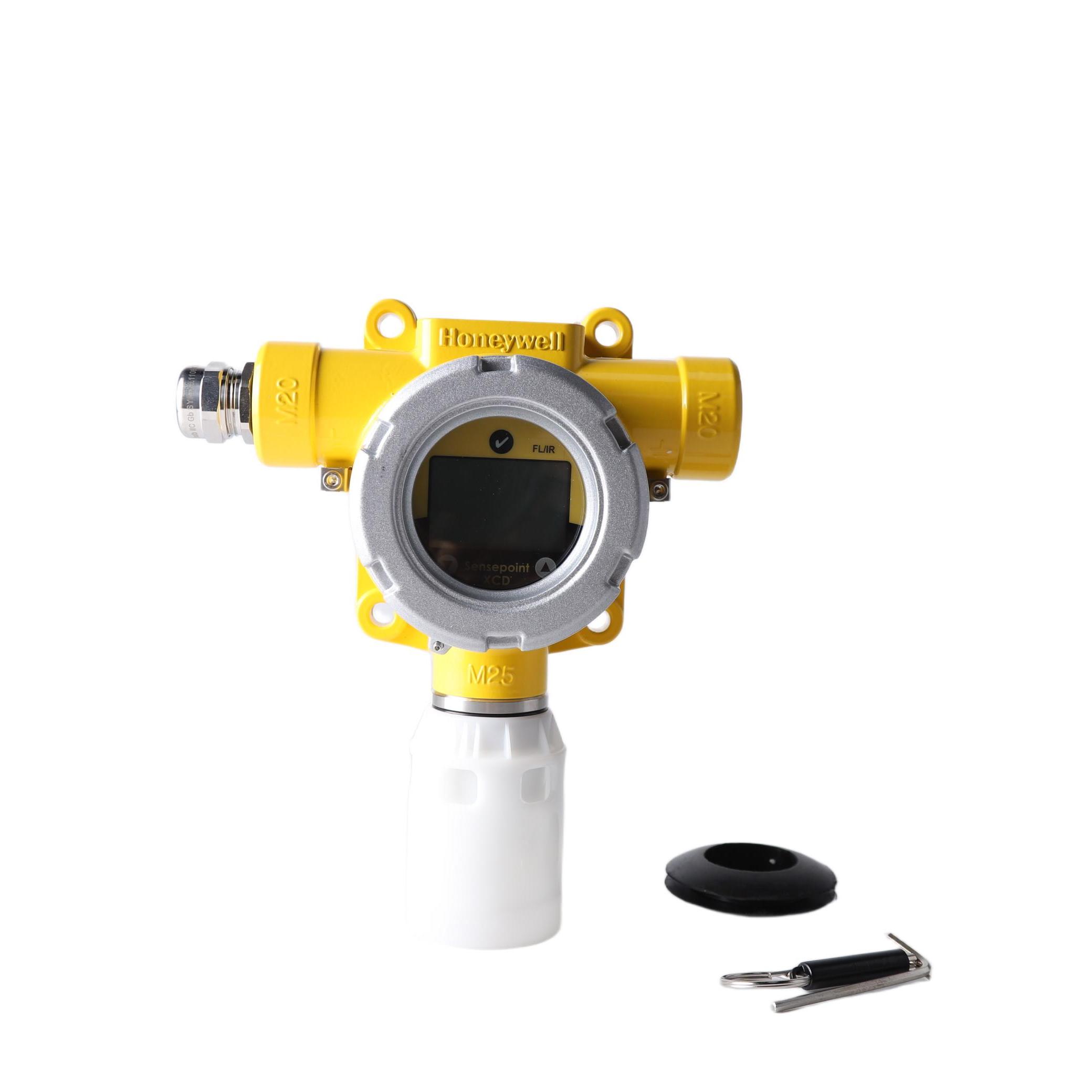
Product Advantages
1. Non-intrusive operation: Calibration & setting by magnetic wand, no need to open explosion housing, safer for hazardous area.
2. Pluggable smart sensor cartridge, auto recognition, fast replacement on site.
3. Tri-color LCD screen, remote visible status: normal / pre-alarm / high alarm / fault.
4. Multiple output options: 4-20mA + relay + Modbus RTU for easy connection to PLC, DCS and gas control panel.
5. Global explosion-proof certificates, suitable for domestic & overseas marine, petrochemical, hydrogen energy projects.
6. IP66 rugged housing, rainproof and dustproof, works indoor & outdoor.
7. Long-term stable SureCell electrochemical sensor, excellent anti-interference performance.
8. Low maintenance cost, single-person operation for bump test and calibration.
Working Principle
The Sensepoint XCD Hydrogen detector uses Honeywell SureCell electrochemical hydrogen sensor. When hydrogen gas diffuses into the sensor chamber, electrochemical redox reaction generates a weak current signal proportional to hydrogen concentration. The transmitter circuit converts the tiny current signal into standard 4-20mA digital value, and the processor compares reading with preset alarm thresholds to trigger relay alarm. The transmitter automatically identifies the sensor type after plug-in. The whole unit monitors hydrogen concentration continuously and transmits real-time data to control system.
Application Scenarios
Hydrogen refueling stations, hydrogen production & storage workshop
New energy lithium battery manufacturing workshop
Power plants, generator rooms, hydrogen cooling units
Chemical, petrochemical plant, refinery
Offshore platform, marine vessel, ship engine room
Wastewater treatment plant, semiconductor factory
Hydrogen energy test laboratory, hydrogen storage cabinet room
Explosive hazardous zone with flammable hydrogen risk
Maintenance Instructions
1. Daily Check: Observe LCD status, confirm no fault warning, check cable and housing for damage.
2. Bump Test: Gas bump test every 3–6 months with standard H2 calibration gas.
3. Formal Calibration: Full calibration once per 6–12 months, using certified standard gas and S3KCAL calibration cap.
4. Sensor Replacement: Electrochemical H2 sensor needs replacement after 2–3 years service life.
5. Clean: Keep sensor filter clean, clear dust and oil contamination regularly, do not wash directly with water.
6. Maintenance Tip: All calibration and test can be completed with magnetic wand without opening the explosion enclosure.
7. Storage: Spare sensor shall be stored in cool dry environment, away from toxic vapour.
Spare Parts & Accessories
1. SPXCD Hydrogen Sensor Cartridge (H2 SureCell Sensor)
2. S3KCAL Calibration Gassing Cap
3. SPXCDCC Collecting Cone (For lighter-than-air gas like H2)
4. SPXCDMTMB Pipe Mount Bracket
5. SPXCDDMK Duct Mount Kit
6. Operating Magnet Wand
7. Weather Protection Filter Assembly
8. M20 / M25 Cable Gland & Blanking Plug
Acceptance Standard
1. Factory Test: Each detector is fully calibrated and tested before shipment, supplied with factory test certificate.
2. Visual Acceptance: Check model label, certification mark, housing no crack, thread intact, accessories complete.
3. Power-on Acceptance: Power on the detector, LCD lights up, self-test pass, no fault code.
4. Signal Test: Verify 4-20mA / Modbus signal output, relay action function.
5. Gas Calibration Acceptance: Perform on-site gas test, reading error within ±5%FS, alarm trigger normally.
6. Document Check: Check datasheet, operation manual, certificate, explosion certificate, test report.
7. Installation Acceptance: Cable entry sealed properly, grounding correct, installed according to hazardous area classification.
Important Notes
> 1. Hydrogen is lighter than air, we recommend installing the detector at high position, and match SPXCDCC collecting cone for better gas capture.
> 2. Confirm measuring range before order: 0-1000ppm or 0-4%VOL for hydrogen.
> 3. The product only includes transmitter + sensor cartridge by default, calibration gas and gas controller are sold separately.
> 4. Please confirm required certification standard: ATEX / IECEx / UL according to your project country requirement.
> 5. Not suitable for long-term exposure to high concentration solvent, silicone vapour, which will poison the electrochemical sensor.
FAQ
Q1: Can I open the housing for calibration?
A1: No. Sensepoint XCD supports non-intrusive setting & calibration by magnetic wand. Opening the explosion housing in hazardous area is forbidden.
Q2: What is the service life of hydrogen sensor?
A2: The SureCell electrochemical hydrogen sensor lasts approx 2~3 years, service life depends on gas concentration and environment.
Q3: Does it work with Honeywell gas alarm controller?
A3: Yes, it can connect to Honeywell control panels or third-party DCS/PLC via 4-20mA or Modbus RTU.
Q4: Can it be used on ships / marine?
A4: Yes, with valid explosion certificates, it is widely used for marine and offshore projects.
Q5: What’s the difference between catalytic hydrogen sensor and electrochemical H2 sensor?
A5: Electrochemical H2 sensor is suitable for low ppm hydrogen detection; catalytic sensor is for %VOL flammable range.
Q6: Is the sensor replaceable on site?
A6: Yes, pluggable cartridge, transmitter auto recognizes sensor, no complex configuration needed.


